Face recognition vs fingerprint locks
Short answer. Fingerprint locks are fast, simple and work well for people who use the door daily. Face recognition suits people who often arrive with full hands and adds a camera for seeing who is outside. Most households do best with either one plus a PIN code and a backup key.
How does a fingerprint lock work?
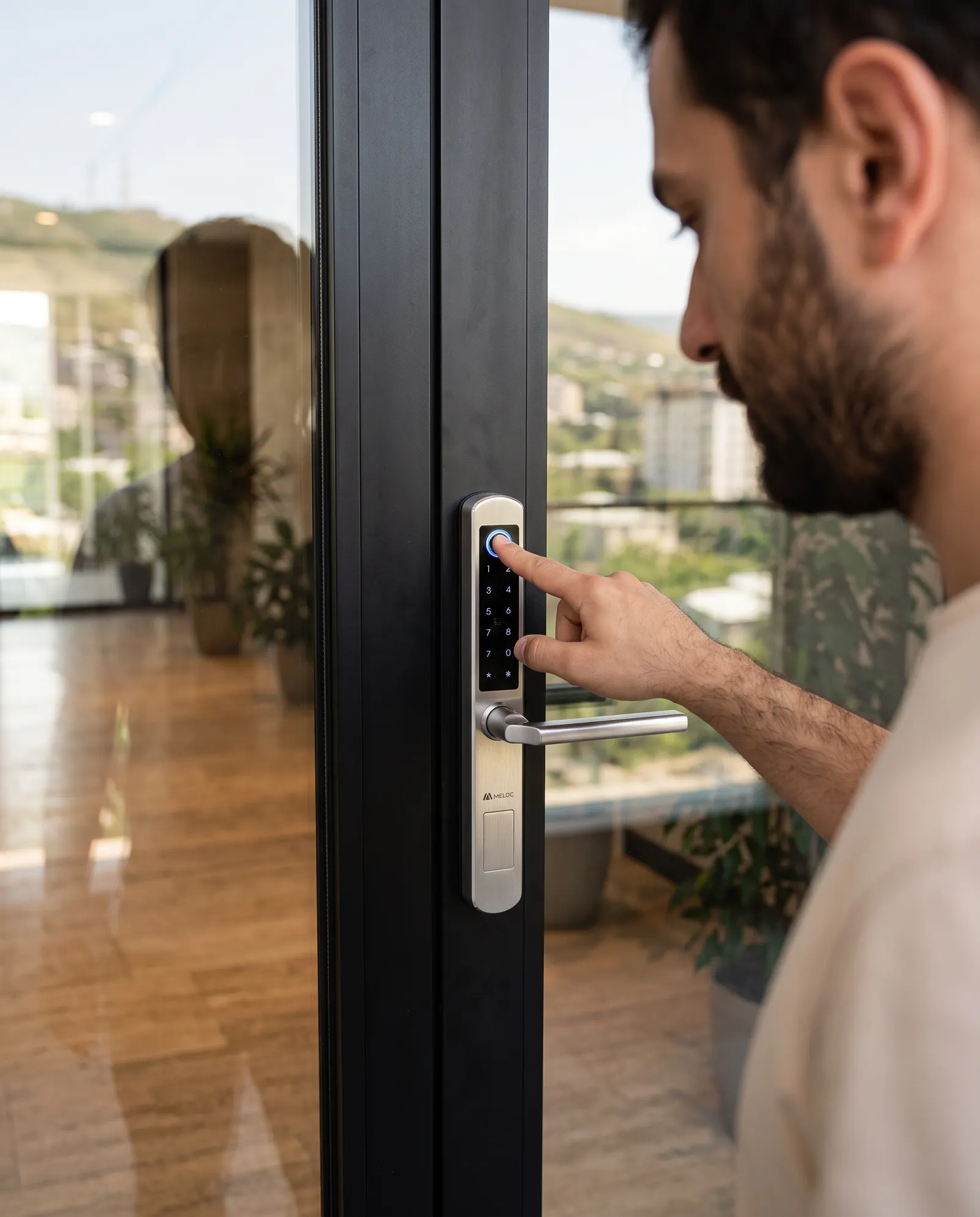
A fingerprint lock has a small sensor, usually in the handle or on the face of the lock. You register a finger once. When you touch the sensor later, the lock compares the print with the stored one and opens if they match.
It is a familiar idea because phones use it. The experience is quick when the finger is clean and dry, and slower when it is wet, dirty or worn.
How does face recognition work on a door?
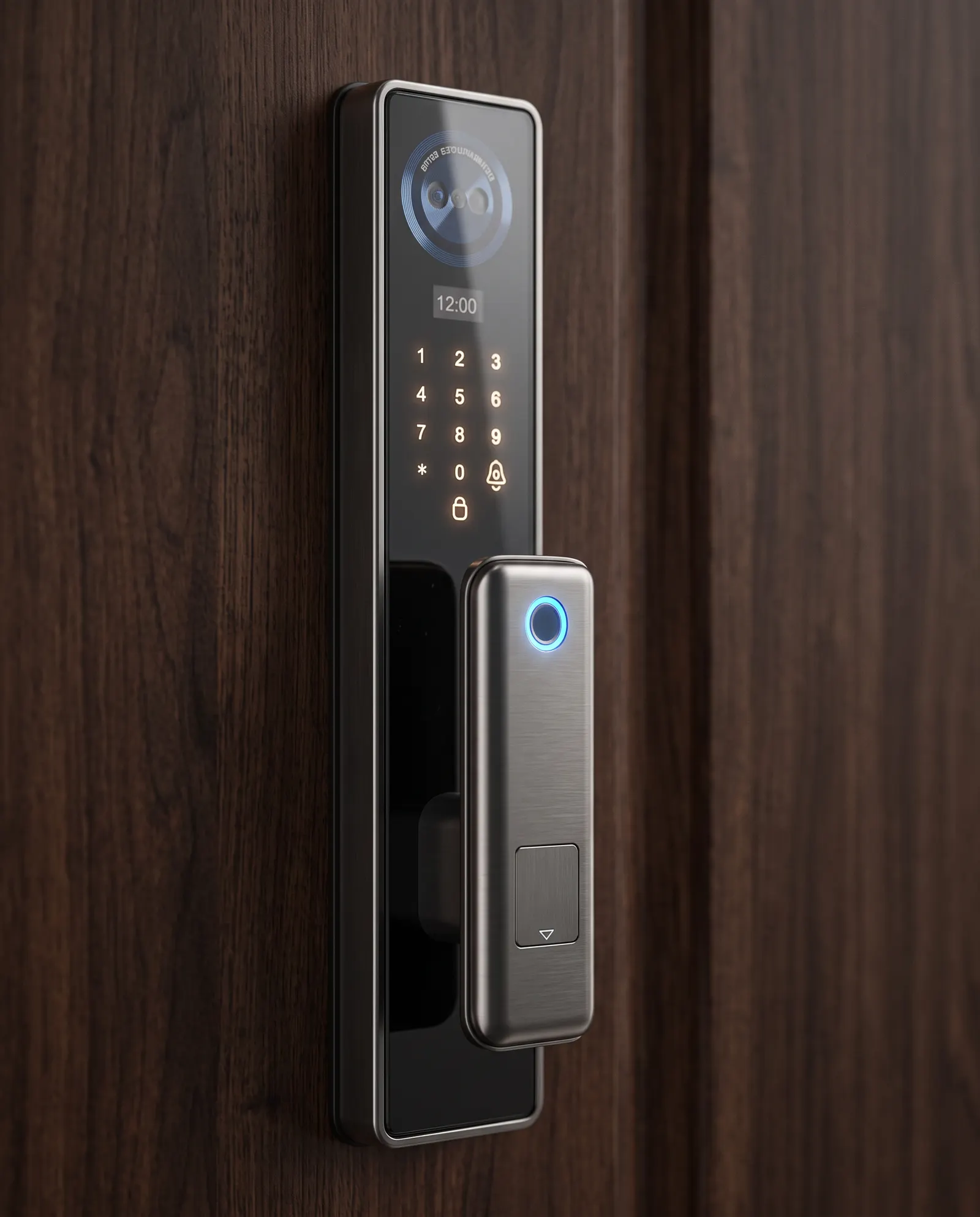
A face-recognition lock uses a camera to look at the person standing at the door and compares what it sees with the faces you registered. Because it needs a camera, these locks usually also include a screen so you can see who is outside.
Meloc Prime combines face recognition with fingerprint, PIN, card, app and key, plus a door-viewer camera and built-in screen.
When is a fingerprint lock the better choice?
Fingerprint suits a simple household that wants fast, reliable entry without extra hardware on the door. It works in poor light and needs no camera.
- Daily users who touch the same sensor
- Doors where you do not need to see visitors
- Households that prefer fewer moving parts
- Locks in rented flats and shared buildings
When is face recognition the better choice?
Face recognition suits people who come home carrying shopping, a child or a bag. There is nothing to touch. The camera and screen also help on a front door that sees deliveries and visitors.
Think about lighting at the door, and about privacy. A camera on the door points at your corridor or landing, so consider your neighbours and local rules.
Should I rely on only one method?
No. Whatever the lock, keep more than one way in. A PIN code covers visitors and anyone whose finger or face fails to register. A mechanical key covers the battery running low. All Meloc locks include a backup key.
Treat biometrics as a convenience layer, not the only door to your home.
A quick way to decide
Answer these four questions honestly.
- Do I want to see who is at the door? Face with screen
- Do I want the simplest possible lock? Fingerprint
- Do guests need access? Add a PIN code either way
- Will I forget my phone? Choose fingerprint or face over app-only
What affects reliability day to day?
Both methods depend on conditions. Fingerprint sensors prefer clean, dry fingers and a steady touch. Cameras prefer even light and a clear view of the face, so strong backlight, dark corridors and hats can all make a difference.
Place the lock and any light with this in mind. A well-lit landing helps a face-recognition lock, and a sheltered door helps a fingerprint sensor.
When you register users, enrol more than once if the lock allows it, in the conditions you will really use it. A quick registration standing in the showroom rarely matches a rainy evening.
What about children and older relatives?
Think about everyone who will use the door. Children's fingerprints and faces change as they grow, so a PIN code or card is often easier for them. Older relatives sometimes find a code simpler than a sensor.
The best setup is the one every person in the home can use without thinking. Choose for the least confident user, then add faster methods for the rest.
Questions and answers
Can a photo unlock a face-recognition lock?
Security varies by lock and by how it checks faces. Ask the supplier how a lock handles this, and keep a PIN and key available as other ways in.
Do fingerprint locks work with wet hands?
Wet or dirty fingers are harder for any fingerprint sensor to read. A PIN code or key is the fallback.
Which Meloc family has face recognition?
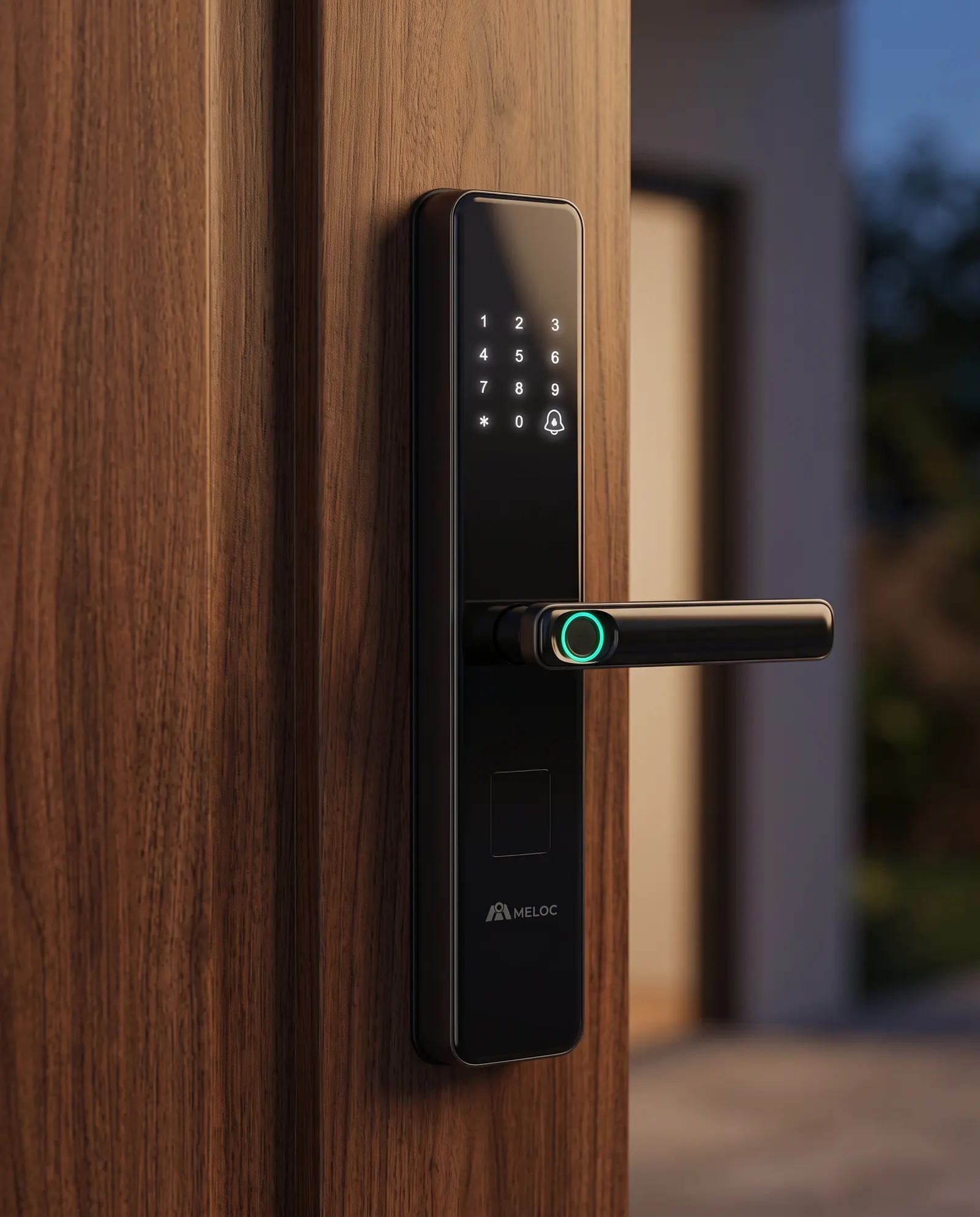
Prime. Pro, Slim and Lite use fingerprint, PIN, card, app and key.
 Smart locks